Roofing Guide
What to Check After Hail or Wind
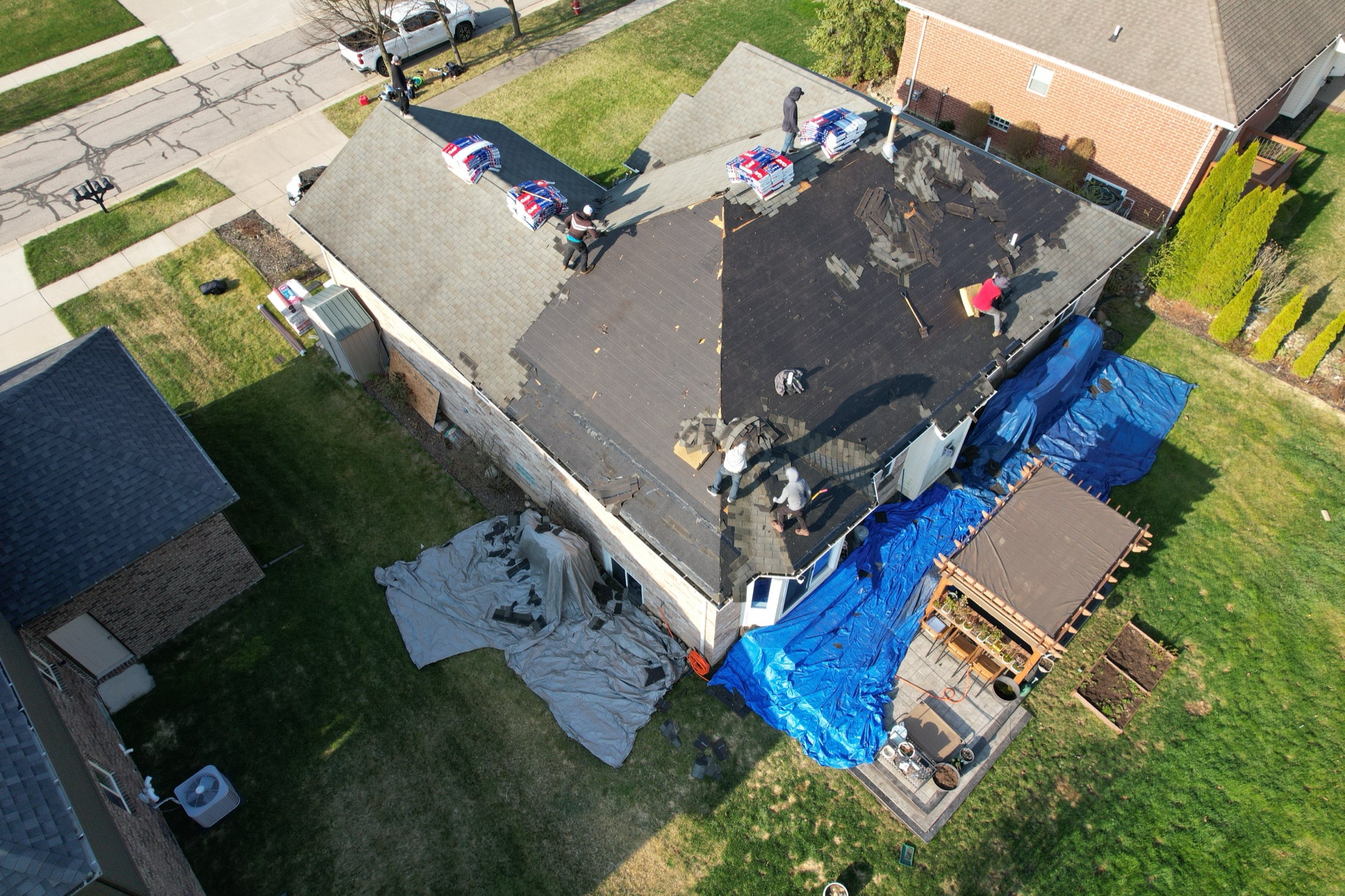
After severe weather, walk the property from the ground and look for shingle pieces, dents on soft metal, displaced flashing, damaged vents, clogged gutters, and new interior water marks.
If you see active leaking, protect the inside of the home first. Move belongings, collect dripping water, and document the area with photos. Then schedule a roof review as soon as possible.
Storm damage is not always obvious. Hail can bruise shingles without creating an immediate leak, so a roof can need attention even when it looks normal from the driveway.
Start with the safest checks
Do not climb onto a wet, steep, or damaged roof. The most useful first pass can usually happen from the driveway, yard, attic access, and interior rooms. Look for anything that changed after the storm: loose material near downspouts, new granules in gutters, branches against the roofline, dented vents, or shingles that no longer sit flat.
Inside the home, check ceilings, upper walls, closets, attic decking, and areas around bath fans, chimneys, skylights, and roof penetrations. A small stain can be easy to ignore, but fresh discoloration after heavy wind or hail is worth documenting.
What to photograph
Photos help your roofing team understand the timeline and the severity of the storm. Capture wide shots of each roof slope from the ground, then closer images of visible damage when it is safe to do so.
- Shingle pieces or granules on the ground
- Dented gutters, downspouts, vents, or flashing
- Lifted, creased, missing, or shifted shingles
- Water marks on ceilings, drywall, attic framing, or insulation
- Fallen limbs, debris impact, or clogged drainage areas
When to schedule a roof review
Schedule a review when you see active leaking, missing shingles, visible impact marks, or enough debris to suggest the roof took a direct hit. It is also smart to start a review after major hail or high wind even if the roof looks fine from the street.
Ambia looks at the roof as a system: shingles, flashing, ventilation, penetrations, gutters, and the areas where water is most likely to find a path inside. The goal is to separate cosmetic noise from real roofing risk so the next step is clear.
What happens next
After the roof review, you should understand what was found, what needs attention now, and whether repair or replacement is the better long-term path. A good recommendation should be specific enough to act on without making the project feel more complicated than it is.